
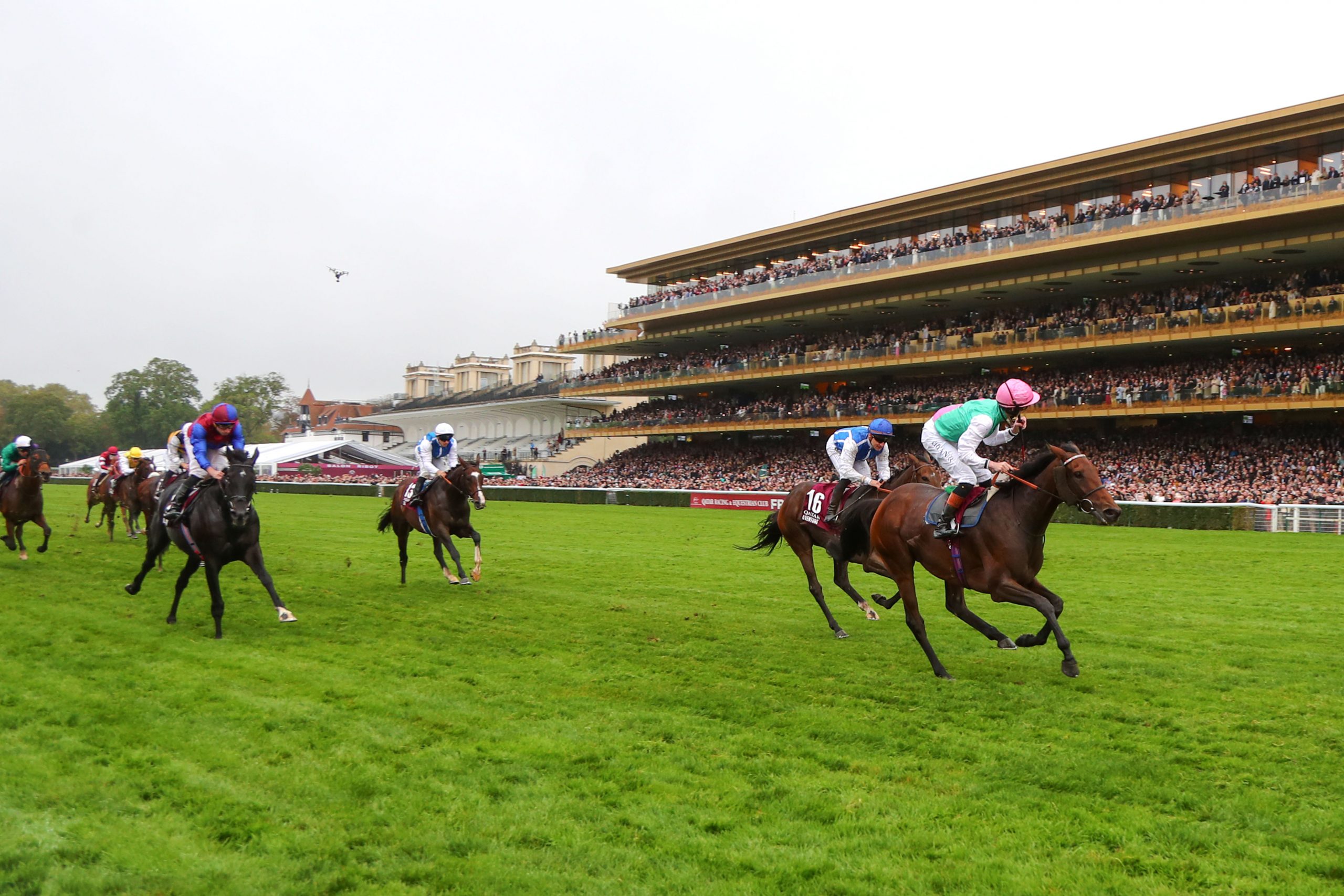
Fair play to the number crunchers and bean counters at Juddmonte and to English trainer Ralph Beckett for having the chutzpah to supplement their mare Bluestocking for the Prix de l’Arc de Triomphe, Europe’s most prestigious race.
Their 100,000 Pounds gamble paid off in spades when the four year old daugher of Camelot landed the Pounds 2.484 million prize from the French filly Avenuture with the front running Aidan O’Brien trained colt Las Vegas third.
But the result, interesting enough as it is, only serves to throw up two big questions.
How far might City of Troy, the star pupil at O’Brien’s Ballydoyle stable, won the Arc by had he been set an assignment over 2400 metres in Paris rather than a Breeders Cup Classic target at Del Mar in three weeks time?
And would the result have been very different had the French authorities gone through with an immediate decision to lift the ban on geldings contesting their premier Group 1 race rather than putting it on the back burner as an issue to be considered for the future, as it will be by the European pattern race committee.
Because if they had just acted unilaterally (something many advocates have been proposing) then the two star middle distance geldings of the European season, Goliath and Calandagan, would certainly have been expected to trouble the principals, if not dominate the race itself.
City of Troy had put paid to Bluestocking with consumate ease in the Juddmonte International at the York Ebor Festival meeting, beating the mare more than eight lengths into fourth place that day.
She may have been better suited by the 2400 metres of the Arc rather than the 2000 metres at York, but surely she would not have got much closer to O’Brien’s stable star had he showed up in Paris.
In fact, such was Beckett’s pessimism at the time that he had said after the Juddmonte defeat that it was probably better in the future for Bluestocking to stick to fillies and mares events rather than take on colts and entire horses, never mind geldings.
It is likely that the absence of City of Troy and the two geldings did play a major role in the decision to go to Paris, as well as her good form in her post York start when she won the group 1 Prix Vermeille for fillies and mares, defeating Aventure on that occasion as well.
What of Calandagan? Surely he would have been the horse to beat had he been allowed to run at Longchamp given the fact that in the same Juddmonte race at York he had been the only one to give City of Troy any problems, eventually finishing second beaten a length.
Prior to that he had seen off a decent field of group 2 stayers at Royal Ascot when he had won the King Edward VII Stakes in late June.
Goliath’s credentials were even more apparant given that he had defeated Bluestocking by over two lengths when he sprang a 25-1 shock in the group 1 King George VI and Queen Elizabeth Stakes at Ascot at the end of July.
In that race he came swinging to the front on the bridle when not just Bluestocking but horses of the calibre of Auguste Rodin were flat to the boards and ended up posting one of the quickest times of the day relative to the racing surface.
City of Troy may well add to his lustre by winning on dirt in America to give the Coolmore team something they have never managed before, but he would certainly have enhanced what was a competitive if not stand out Arc.
As for the geldings? Well, Europe’s loss may be to the benefit of US, Hong Kong and Australian racing, as the pair may be forced to travel the world to run in group 1 races next season.
A postscript to the Arc would not be complete without a word of congratulations to the OTI organisation run by Australian investor Terry Henderson. Their decision to run Sevenna’s Knight was justified by the son of Camelot, who finished best of the rest in fifth place. He is a high class stayer and should they bring him to Australia in future he would be a major contender for the Cups races.
